Lavender, festivals, and refuge from Japan's blistering mainland heat.
When to go
Mid June – Late August
Weather
17–28°C · low humidity, long daylight, almost no tsuyu rainy season
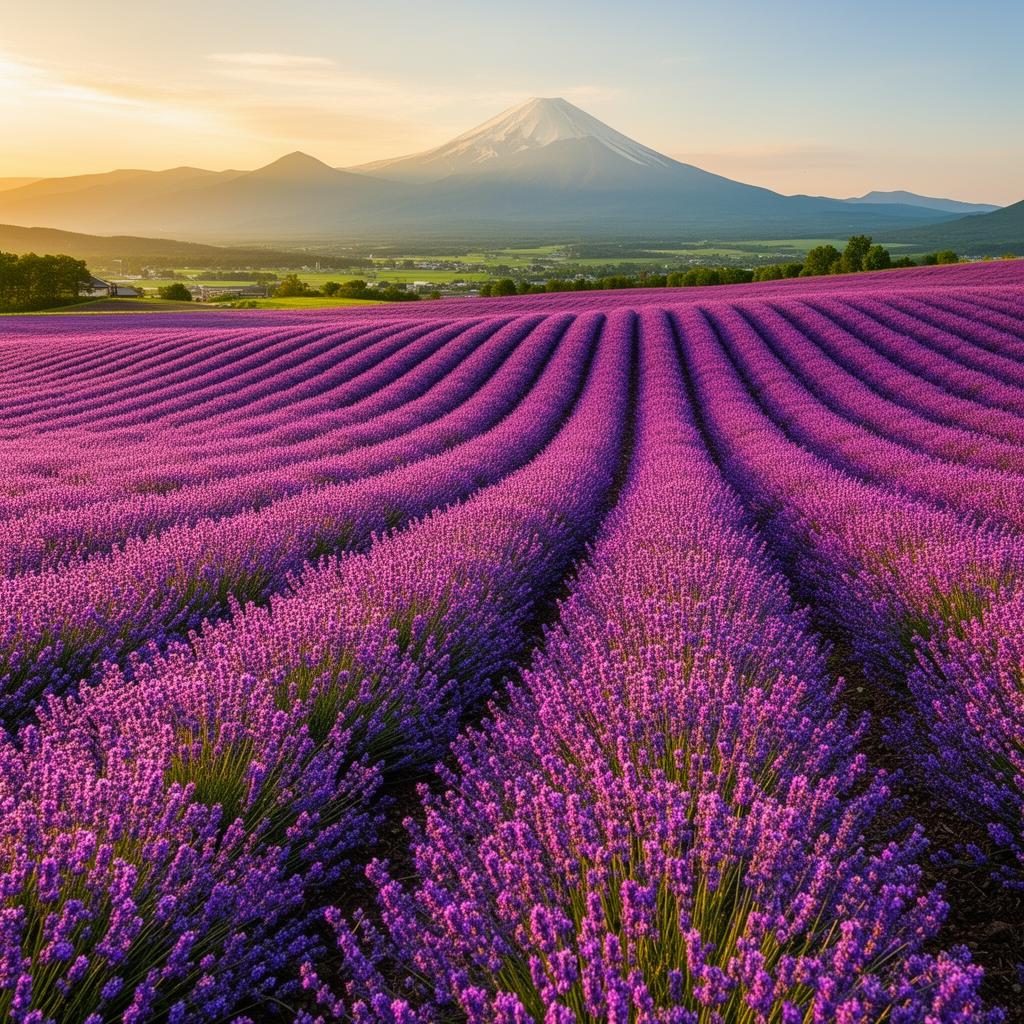
While Tokyo bakes at 35°C, Hokkaido sits comfortably in the low 20s. This is the only Japanese summer where you can hike, drive, and eat outdoors without melting — and the entire Furano-Biei basin turns into a patchwork of flower fields.
Why travel in summer
Hokkaido essentially skips the tsuyu rainy season. Daylight extends past 7pm, mosquitoes are minimal, and the central plateau hosts a different flower bloom every two weeks: lupines in June, lavender in July, sunflowers and salvia in August. It is also the friendliest season for first-time drivers.
Driving routes worth planning
Sapporo → Otaru → Niseko → Lake Toya makes a relaxed three-day loop. The Patchwork Road and Panorama Road around Biei are best driven at golden hour. Coastal Route 238 from Abashiri to Shiretoko Peninsula rewards anyone willing to add a fourth day.
Must-see highlights
Farm Tomita (Furano) — the iconic seven-color flower rows, peak early July to mid-August
Shirogane Blue Pond (Biei) — surreal turquoise water surrounded by larch forest
Lake Toya nightly fireworks — every evening April–October, viewable from the lakeshore hotels
Sapporo Beer Garden (Odori Park) — Japan's largest outdoor beer festival, late July to mid-August
Concierge tips
Lavender peaks only 3 weeks. Aim for early-to-mid July; check Farm Tomita's live bloom report.
Pack a light jacket — evenings in Furano and the highlands drop to 12°C even in August.
Reserve rental cars 2+ months ahead; August is Obon holiday and inventory disappears.